
Neuromodulators · The Journal
Masseter Toxins: From Aesthetic Slimming to Medical Relief
One muscle. Two purposes. A considered look at facial contouring, jaw tension, and function.
By Taliah Williamson · The Woodlands, TX

Foreword
Once considered a niche treatment, masseter neurotoxin has become an important conversation in both facial contouring and therapeutic care.
This study explores its dual role in refining the jawline and supporting people affected by bruxism, tension headaches, and temporomandibular joint discomfort. As more patients seek care that connects appearance with wellbeing, Taliah Williamson offers an evidence-led, ethically grounded perspective on dosing and patient selection.
About the Author
Taliah Williamson is a certified cosmetic injector and founder of Tula Tu Aesthetics, a boutique injectables practice serving North Houston. Originally trained in South Africa, she later pursued advanced certification in the United States. Her work centers on facial anatomy, precision neurotoxin injection, natural-looking outcomes, and informed care.
01
One muscle, two purposes
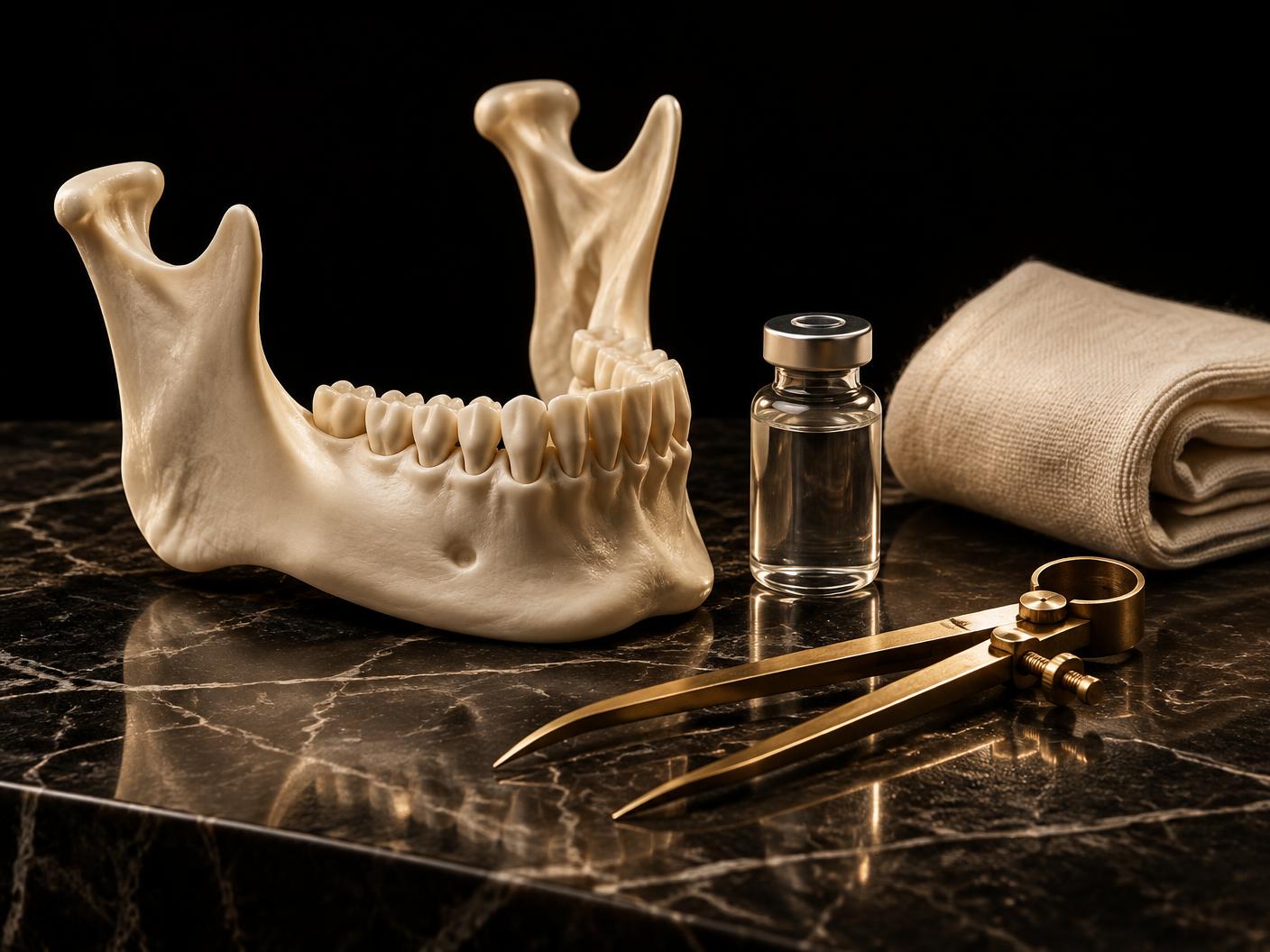
The masseter is one of the body’s strongest muscles. It drives chewing and contributes significantly to lower-face structure. When enlarged, it can create a wider or asymmetrical lower third; when overused through stress, grinding, or clenching, it can contribute to jaw discomfort, headaches, enamel wear, and facial fatigue.
02
Clinical evidence and dosing
Dosing is individualized according to muscle size, strength, symmetry, treatment history, and the patient’s goals. Published protocols often begin around 20–25 units per side in onabotulinumtoxinA equivalents, while therapeutic plans for pronounced bruxism may use more.
Research has reported reductions in masseter prominence and clenching symptoms over approximately 12 weeks, while controlled trials have also observed improvements in bruxism-related quality-of-life measures. These findings inform care but do not replace an individual assessment.
Clinical principle
Begin conservatively, assess the response, and adjust only when anatomy and symptoms support it.
03
Confidence and comfort
The rise of masseter treatment reflects changing ideas of wellness. Patients increasingly value interventions that can support both how they look and how they feel.
- —A gradually slimmer, more V-shaped lower face
- —Reduced jaw tension and discomfort
- —Fewer tension headaches for some patients
- —Less dental wear associated with clenching or grinding
Changes in contour typically emerge over six to eight weeks as the treated muscle gradually relaxes and reduces in prominence. Functional outcomes are individual and should be reviewed over time.
04
Why demand is growing
Masseter treatment has become one of the most discussed off-label uses of neurotoxin. Interest is particularly visible among younger women, high-performing professionals, and people whose stress presents as persistent jaw tension.
- —Greater awareness of facial shape during virtual meetings
- —Preventative attention to clenching before long-term damage develops
- —Growing interest in treatments that unite appearance and wellbeing
A 2022 industry report described growth among patients under 35, particularly women aged 25–40. Trend data can describe interest, but it should never determine whether an individual needs treatment.
05
Injection strategy and safety
Safe treatment requires an exact understanding of the masseter’s borders, depth, contraction pattern, and relationship to surrounding structures. The injector should palpate the full contraction, avoid the parotid gland and risorius muscle, and allow enough time between sessions to assess response.
- Potential considerations
- Asymmetry, unwanted smile changes from spread to adjacent muscles, and temporary chewing weakness can occur.
- Ethical approach
- Conservative starting doses, clear consent, and honest discussion of temporary functional changes are essential.
For a closer look at how Tula Tu approaches this area, visit the Masseter Botox treatment page.
06
Sculpting with intention, caring with integrity
Masseter neurotoxin reflects the evolution of injectables beyond cosmetic touch-ups. In appropriately selected patients, careful treatment can offer visible contour refinement alongside meaningful support for muscle overactivity.
The value lies not in treating every strong jaw, but in understanding the person behind it. Thoughtful technique, conservative dosing, and collaboration with dental or medical professionals protect both function and trust.
References
Shim YJ, Lee MK, et al. (2019). “Effect of botulinum toxin A on masseter hypertrophy and bruxism: A clinical and ultrasonographic study.” Journal of Craniofacial Surgery, 30(3), 874–878.
Kim HJ, Yum KW, et al. (2020). “Efficacy of botulinum toxin A in nocturnal bruxism: A randomized, placebo-controlled trial.” Journal of Oral Rehabilitation, 47(7), 846–852.
American Society for Aesthetic Plastic Surgery. (2022). Aesthetic Neurotoxin Trends Report.
Tan EK, Jankovic J. (2000). “Botulinum toxin A in patients with oromandibular dystonia: Long-term follow-up.” Neurology, 55(12), 1805–1807.
A thoughtful treatment plan begins with your features, goals, and questions.